The Art & the Artist
Trig works from a studio in Essex. Born in the UK and with ties to South Africa, where he once lived, the unexpected spark for his work came from his son’s nursery — and opened the door to something much bigger.
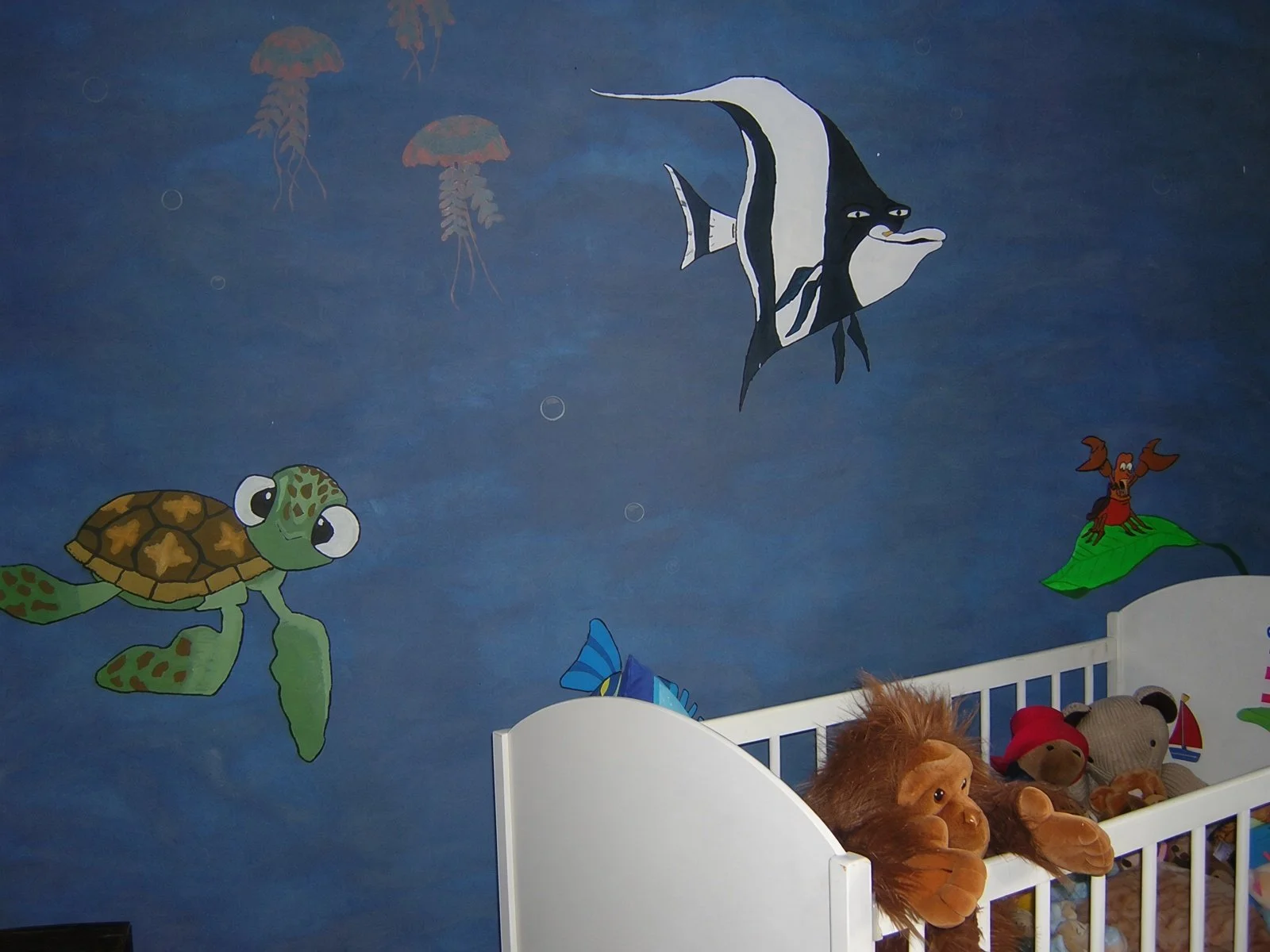
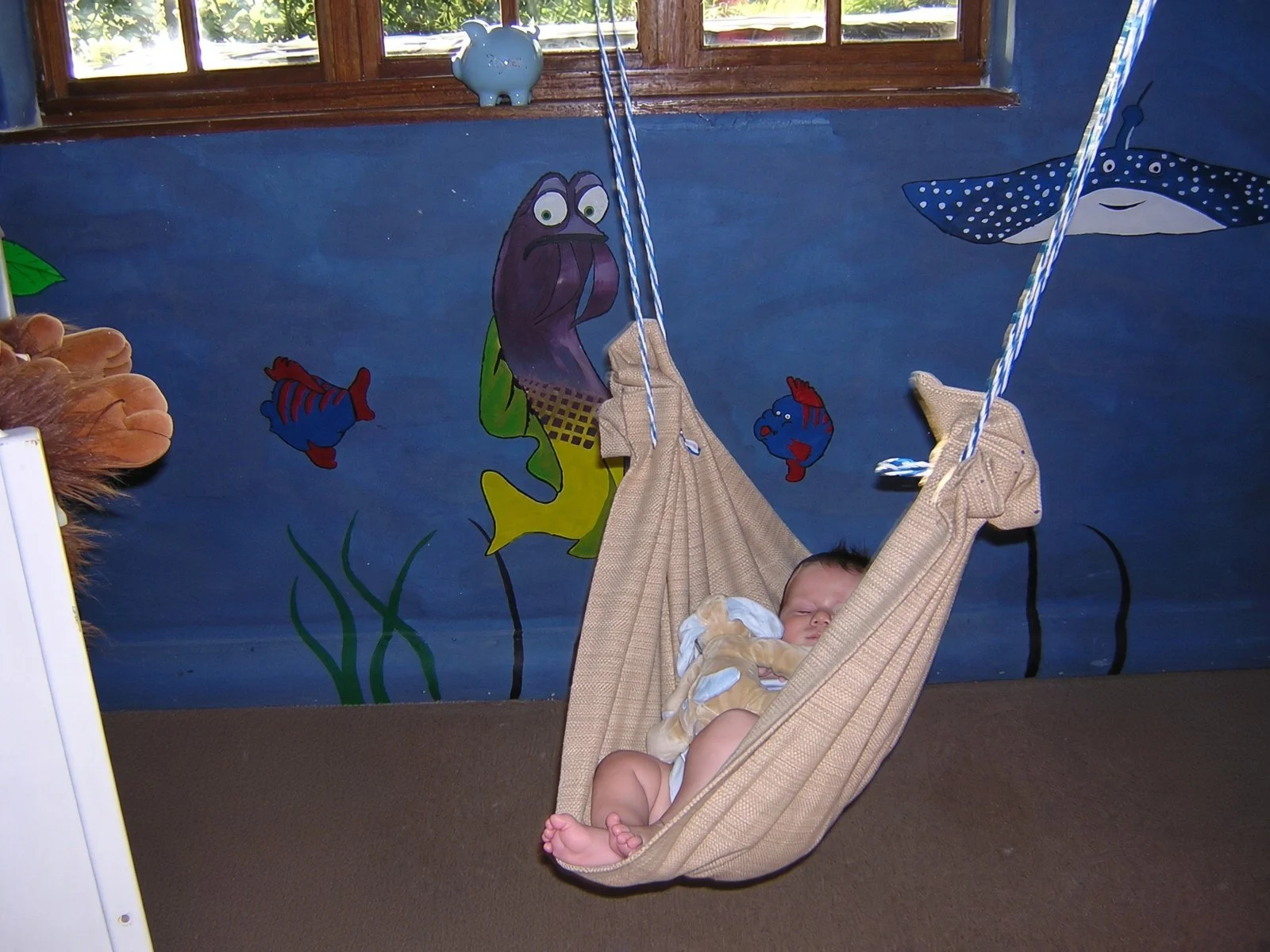
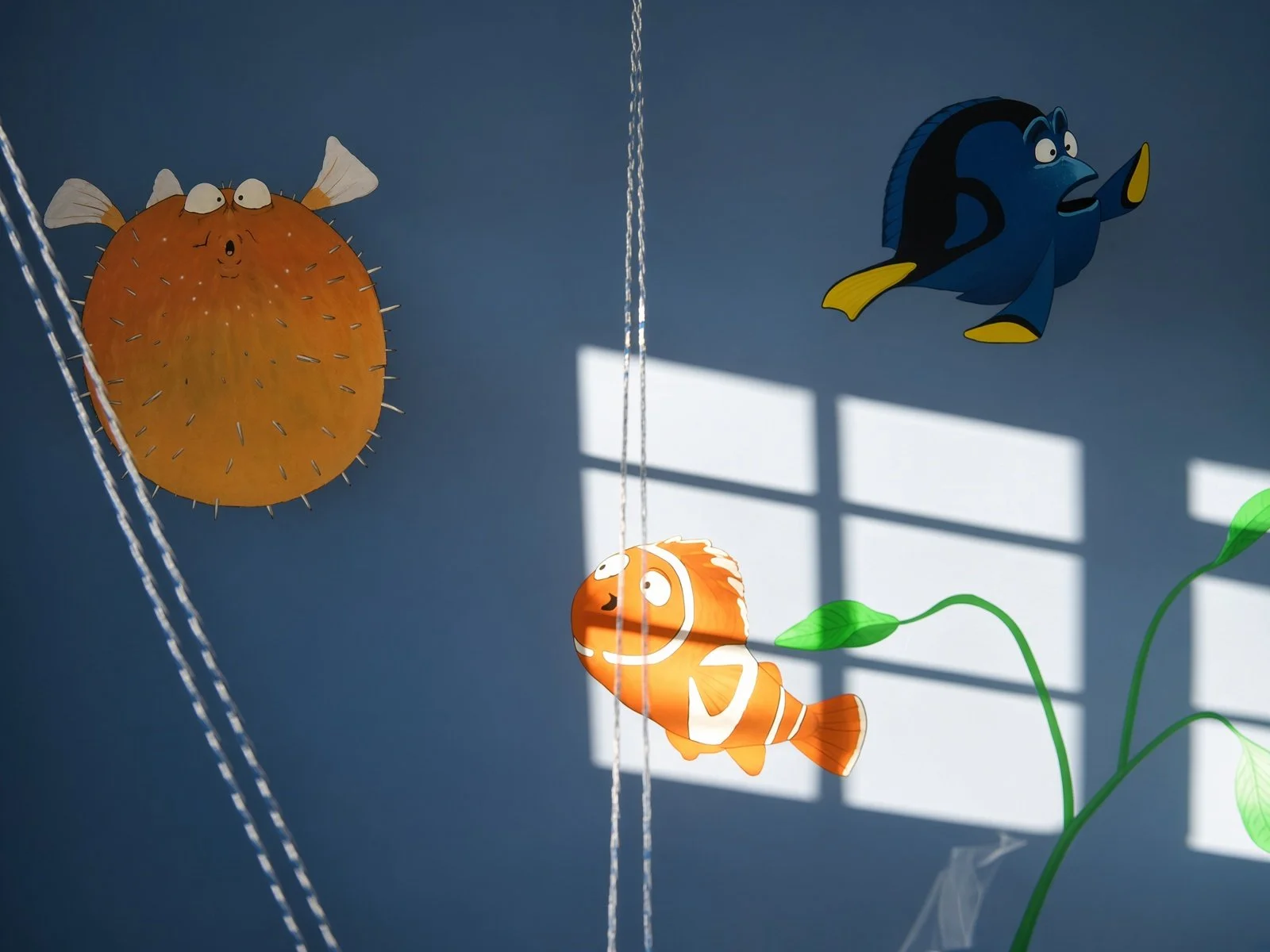
The project began six months before his son arrived. The walls were replastered and turned into a canvas: a blue-sheen base, characters from The Little Mermaid and Finding Nemo, glow-in-the-dark bubbles and jellyfish, illuminated skirting as a night light, and a hammock, because there was no room left for a rocking chair. Hooked up, it held the teddies out of reach. Unhooked, it became the swing. Then there was the chest. Positioned over the plug sockets, it looked wonderfully theatrical: a treasure chest hiding something mysterious. Its real job was less glamorous. Stop a curious toddler electrocuting himself. Art and health and safety, working together. The project kept growing, largely because “just decorating a nursery” was never going to be the end of it. That was the beginning: an idea that refused to stay small.
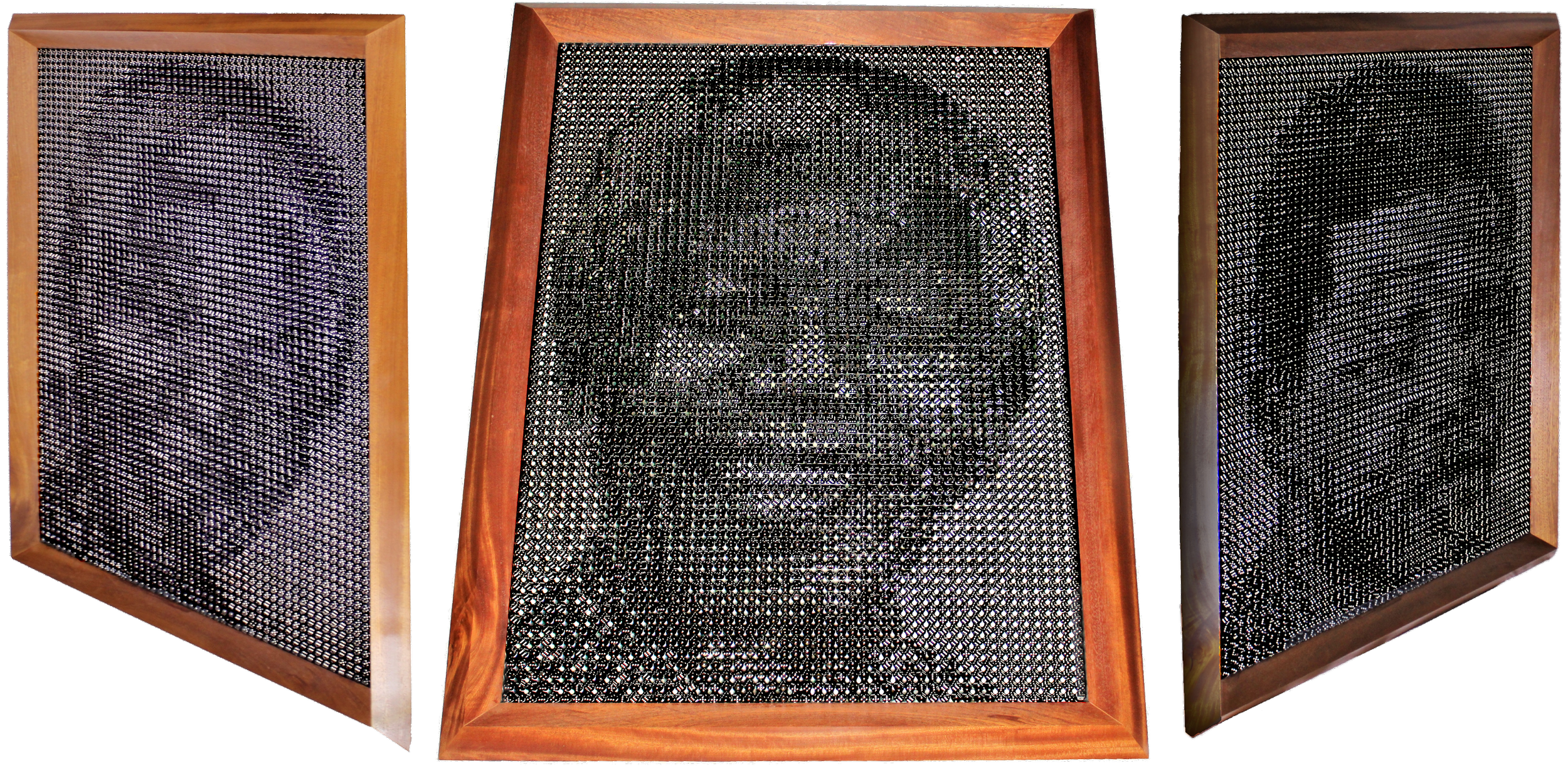
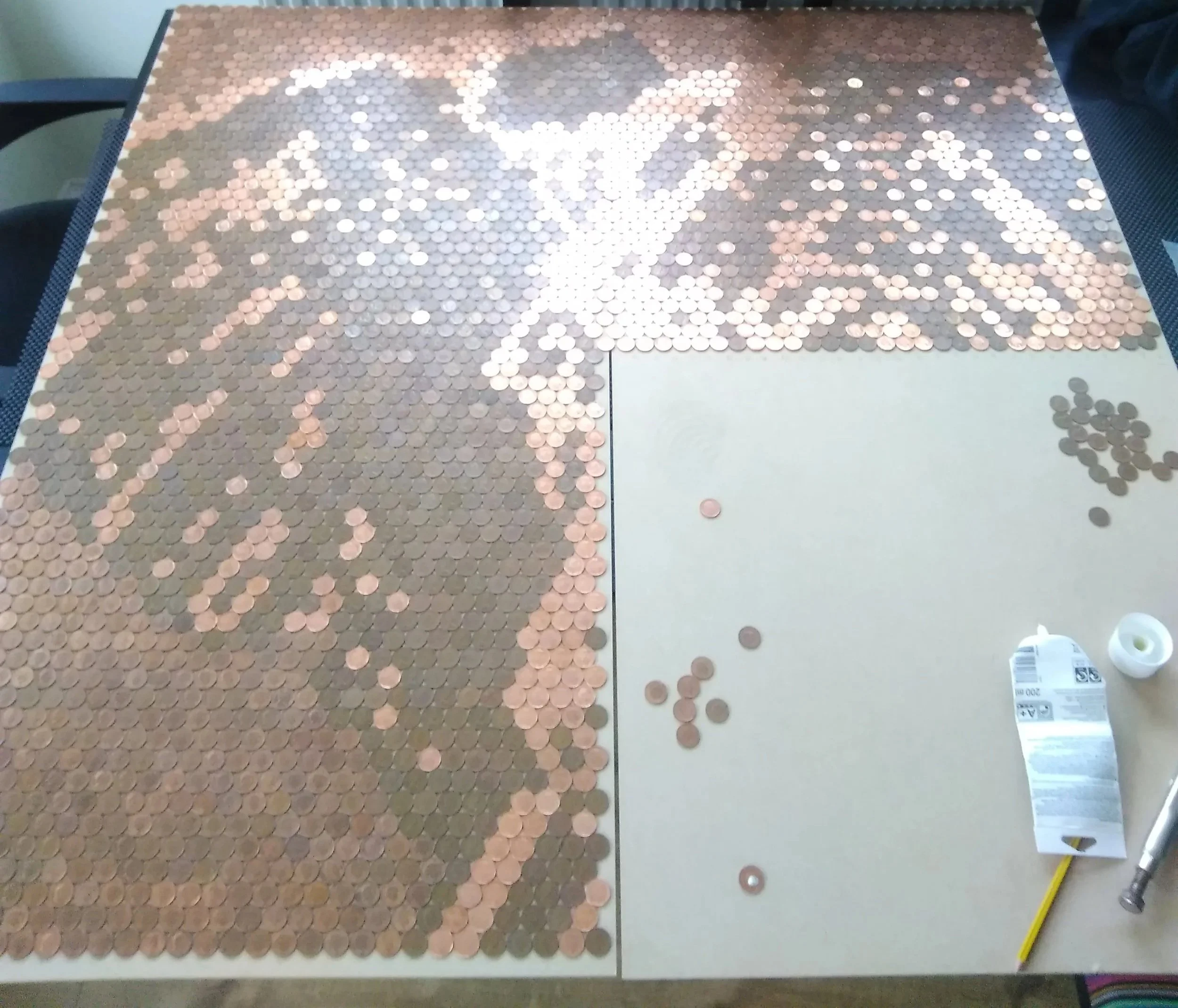
The first large standalone piece came later: John ‘Stoned’, a portrait built from individually hand-sorted stones. Wordplay — usually with a slightly questionable joke — often comes first. Then the real challenge: can one object hold more than one image? Can a title do more than label the work? Dice, coins, stones, sand and resin became the materials for answering those questions. They turn into mosaics, optical illusions and multi-view works that change depending on where you stand. Sometimes moving a few feet is all it takes to find you’ve been looking at the wrong picture. Most pieces come with playful, occasionally cheeky titles. Everything is arranged by hand — often from thousands of individual elements — then finished in solid wooden frames.
The process, from sorting and building to arranging and finishing, is shared on socials and in Behind the Scenes. Large pieces are not quick. Weeks can disappear into the concept. More weeks go into preparing the materials. Assembly can take months, each die, coin or stone placed before the resin locks it — hopefully exactly where it was meant to be. The dual-view and triple-view dice works are the sharpest version of that challenge. Move, and the same surface becomes another image. No screens. No digital trick. Just thousands of tiny objects, a lot of patience, and the occasional need to question your own sanity.
Work is available to buy, hire or commission. Hire terms are on the Commissions and Pricing page. Enquire if you want a piece to own, a display to hire, or something new built from scratch.
Each piece marks a point on the path. Some finally solve a problem that has been hanging around for years. Others create entirely new ones.