The Dice Journey
It began as wordplay and became a problem that took years to solve. Finding a medium that could carry it and then learning how far that medium could go — is the journey. The title came first: Three Nelson Mandela. A drawing would have been too simple, and not the point. The name needed an object that could hold more than one image at once — something that changed when you moved, not when you looked harder.
Dice art was already being argued over: art, or a jigsaw of cubes? Programs can now do the second job, and they come close. What they miss is the faint line that still matters. A program measures the pixel. I decide whether that pixel is allowed to disappear. Every piece sits somewhere between those two things.
Time became the first subject because sequence already lived in the form. Ascension tried to show the passage of monarchy. A second piece followed Elizabeth II from 1952 to 2022. Both worked. Neither was enough. Three images cannot sit as three separate pictures and still be one thing.
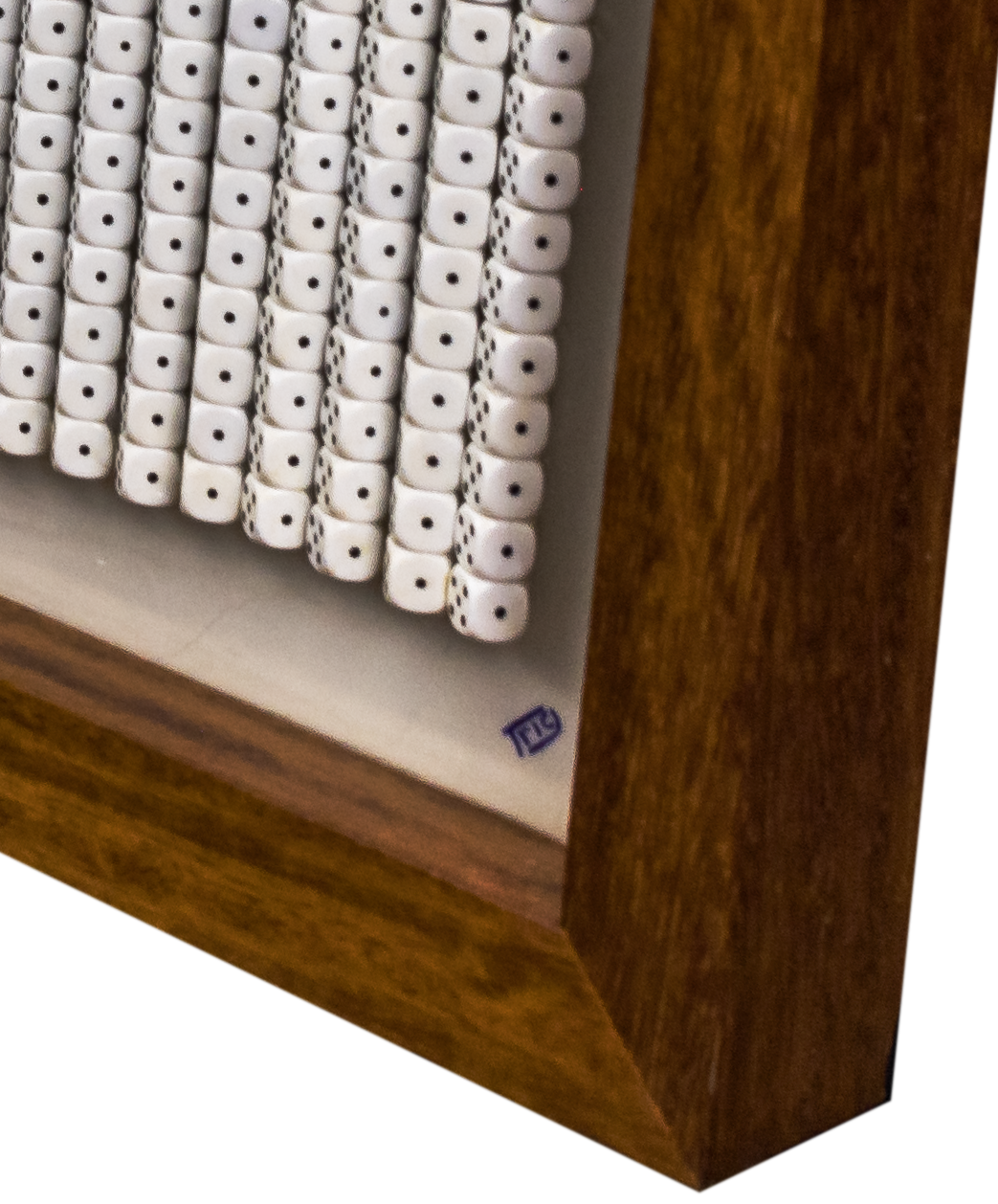
Colour could solve the problem.
Painted pips kept the rule — only dice, only dots — but now there was a way to separate what needed to stand apart. The method was settled. The subject was not. A mask with a face beneath came to mind. Iron Man was too simple for what the work needed. A helmet was better. Once that thought arrived, there was only one helmet that made sense. The colour held. The piece worked. It still did not solve portraits. The dual idea stayed. Heath Ledger’s Joker followed — character and actor in the same block of dice.
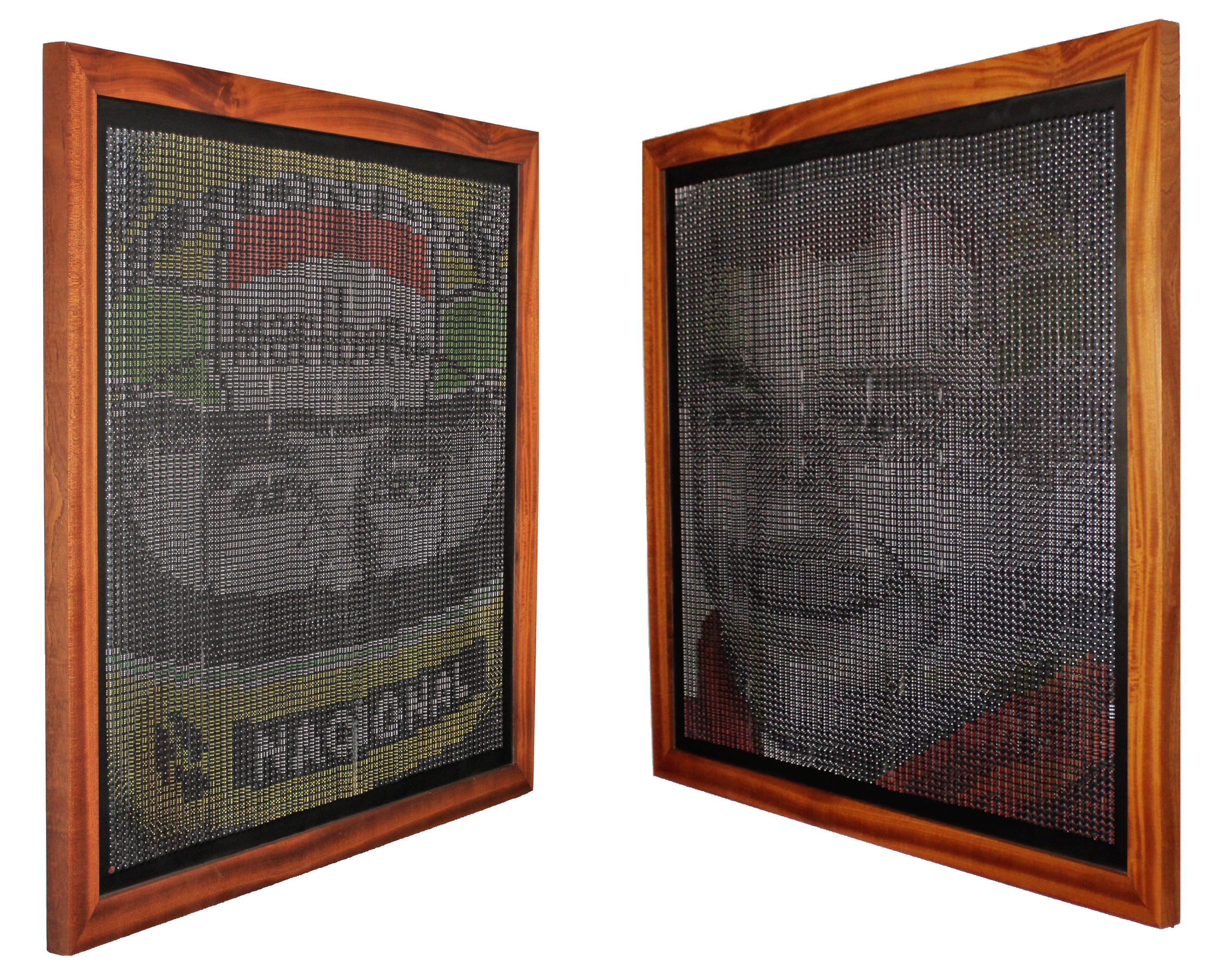
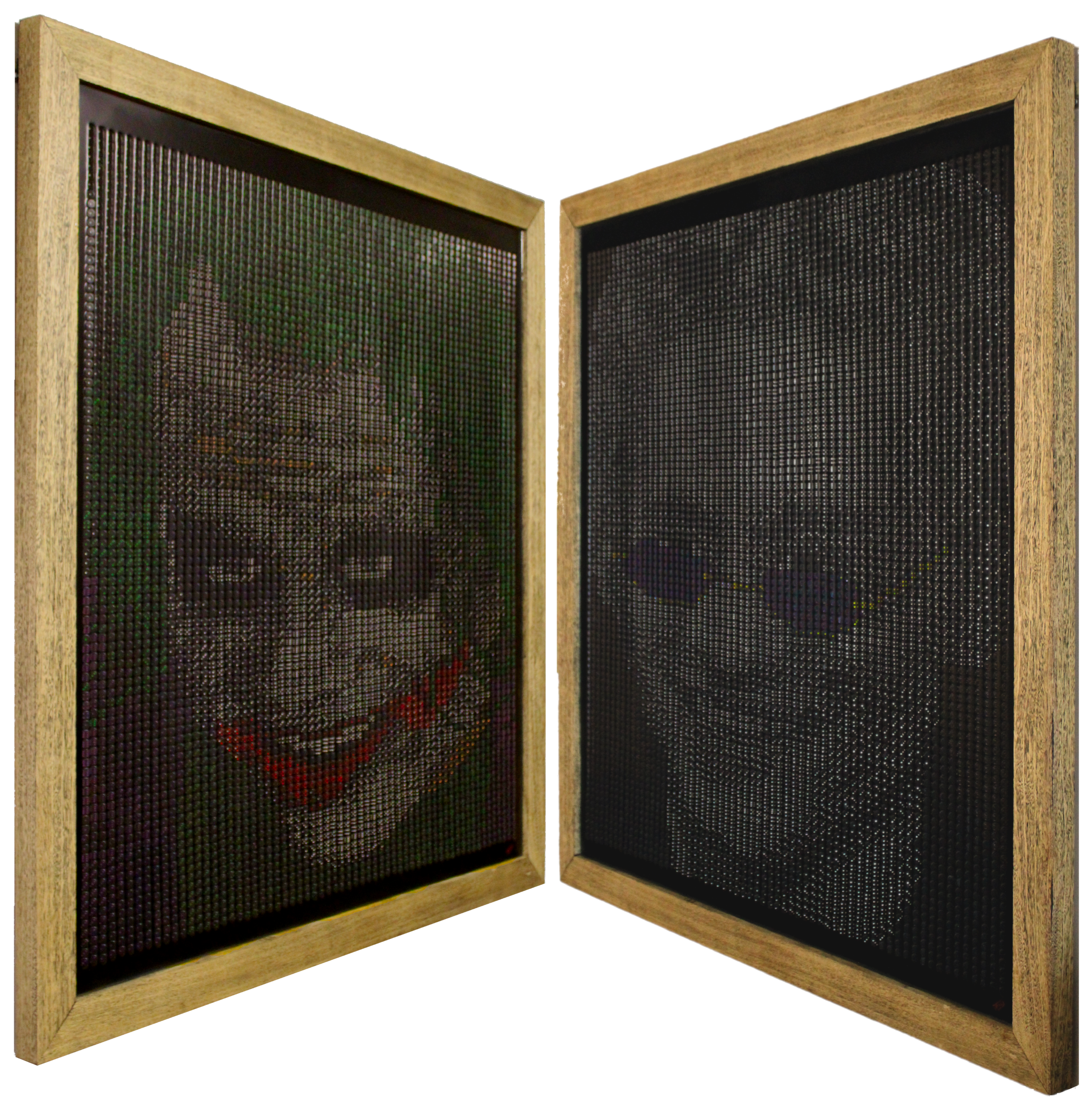
The name was still waiting. Colour wasn’t the answer.
The breakthrough was tone: dots that read as shading from one angle and disappear from the other two.
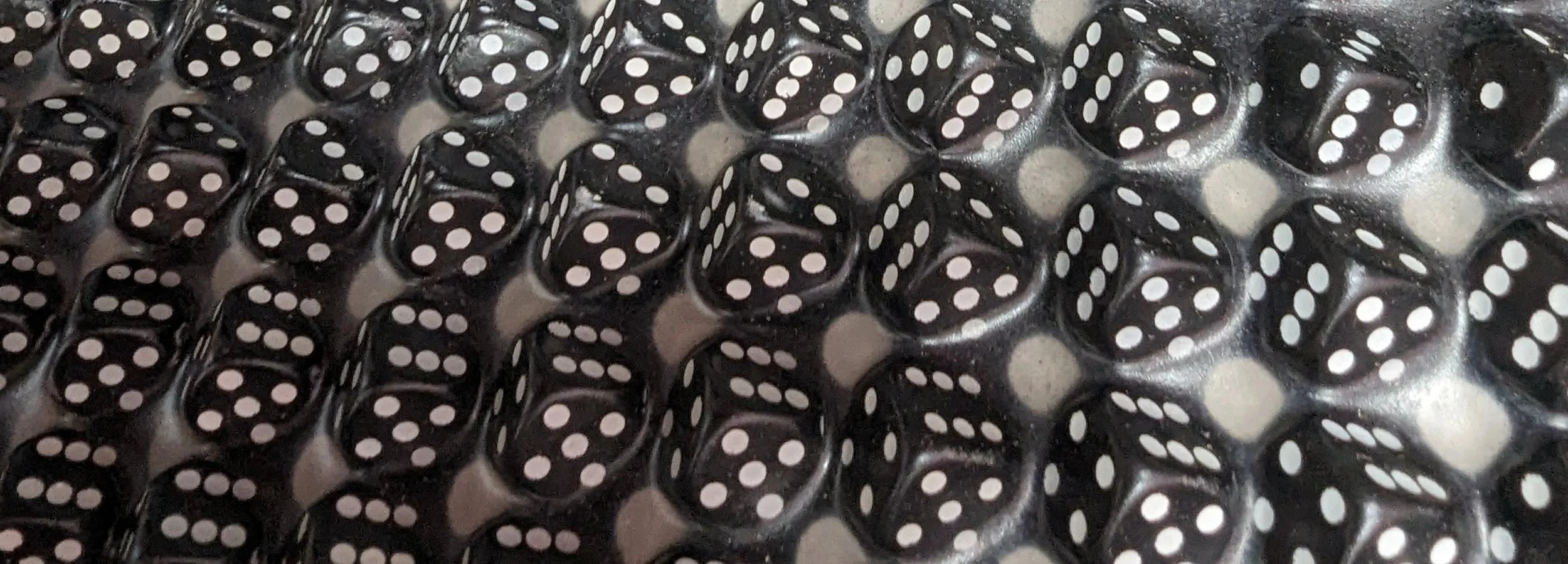
After that, the only question was whether it could be built. Building is slower than the idea. You cannot tell if it is working until enough of the surface exists. Hours become days.
A die has one six. If two images both need that six on the same cube, one of them has to give way — and the third view is forced onto whatever remains (3 or 4). Every placement is a compromise. Too many compromises in a row and the image collapses. Each die has to be remembered against the ones beside it.
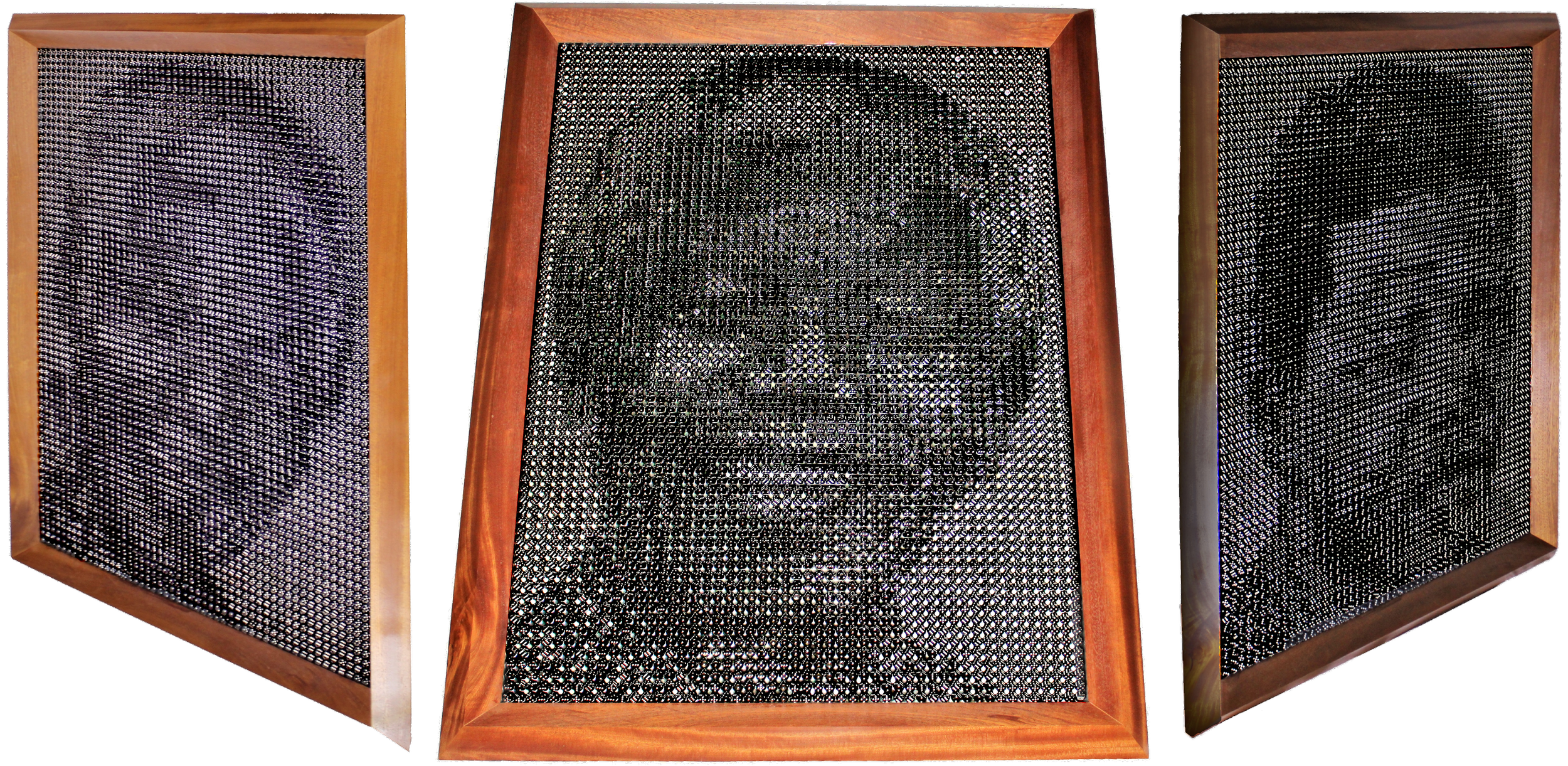
It worked. First Triple Dice Mosaic
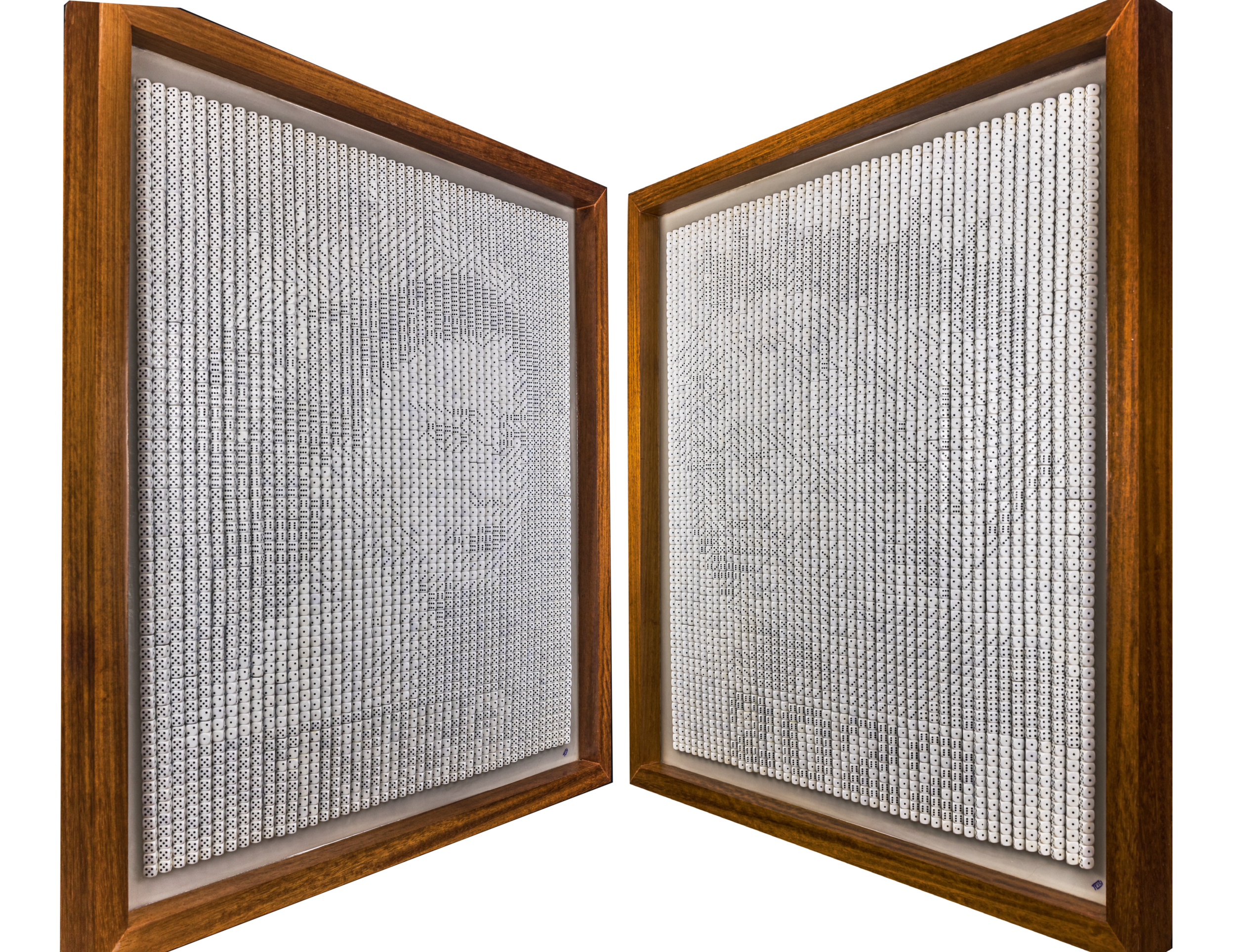
Each image is only visible from one position. The painted dots stayed hidden from the side views and gave the front image the boost it needed. The piece could hang on the landing wall of a grand staircase: look up and it is President Mandela; down from the left and the right, Nelson at different points in his life.
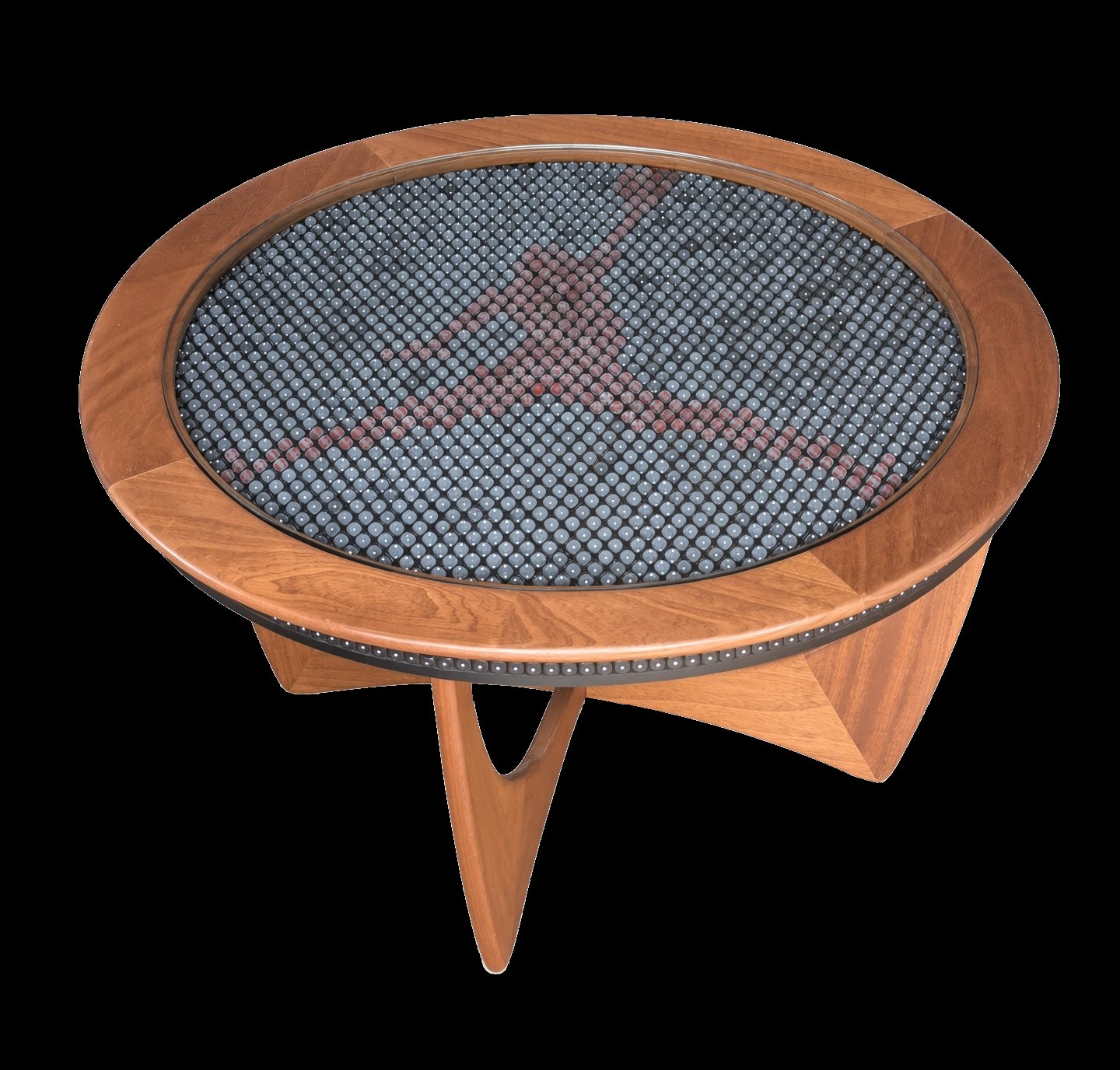
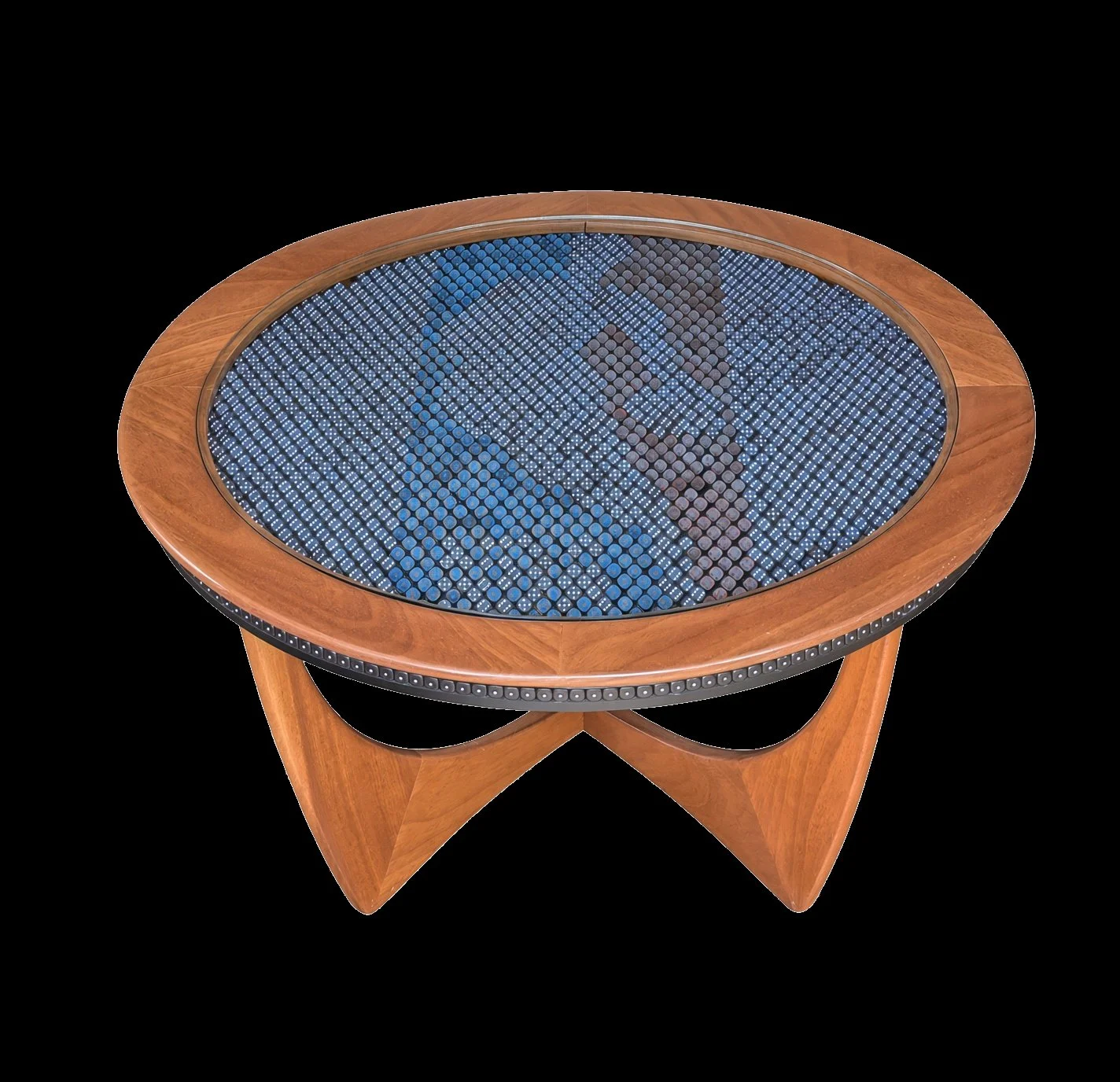
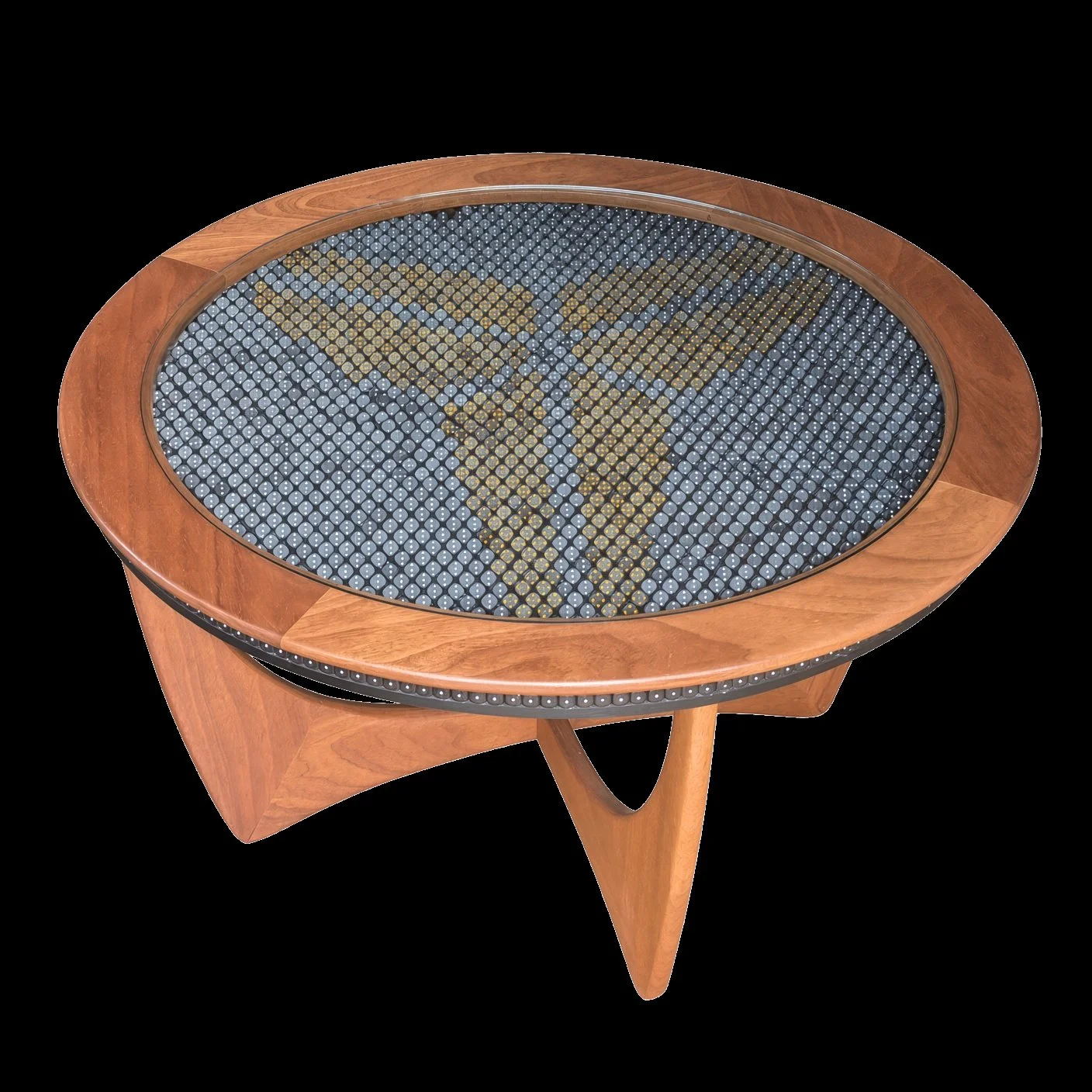
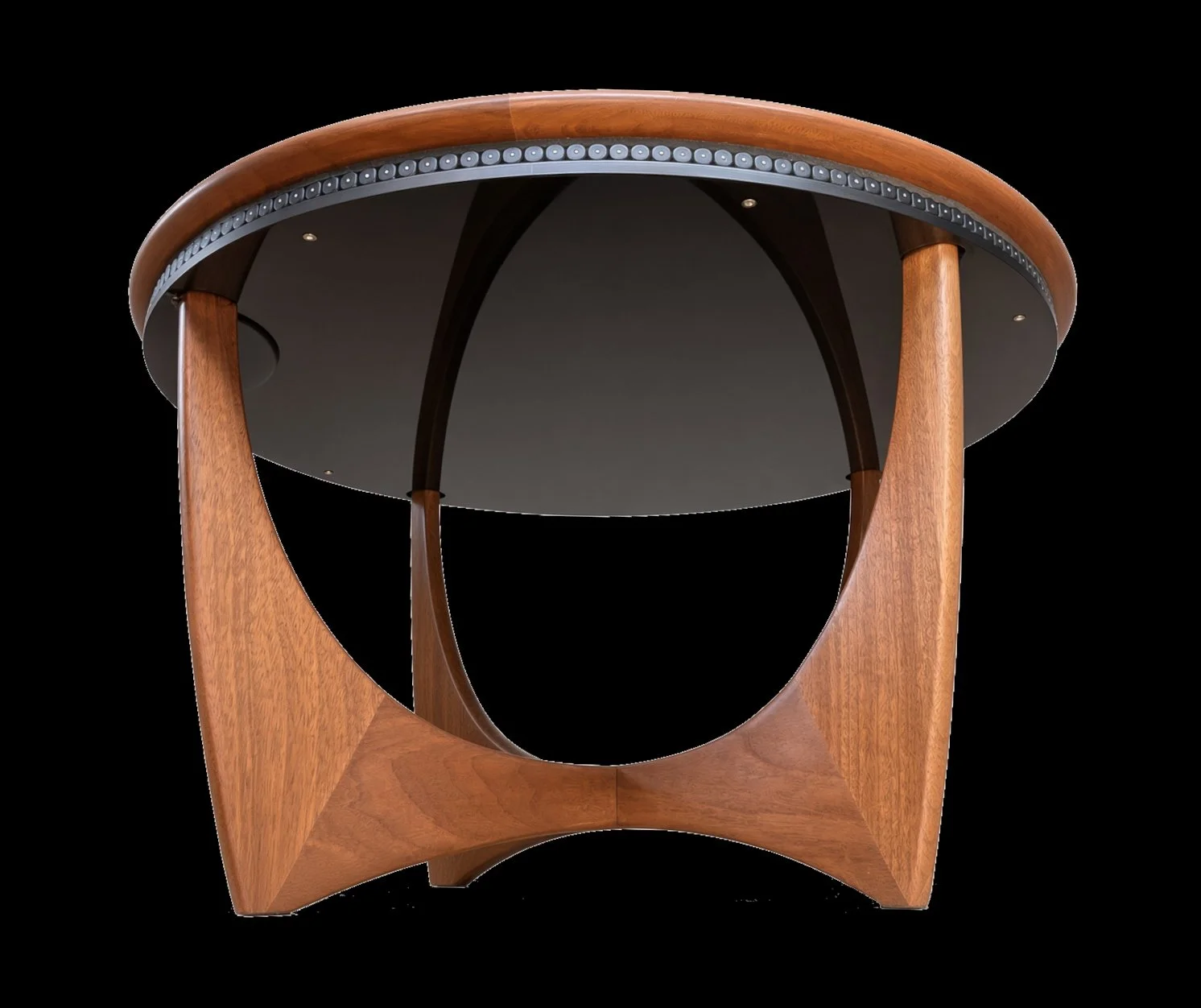
After the first triple-view piece, the same logic went into a coffee table: a 1960s G-Plan base, dice set under glass, three images depending on where you stand.